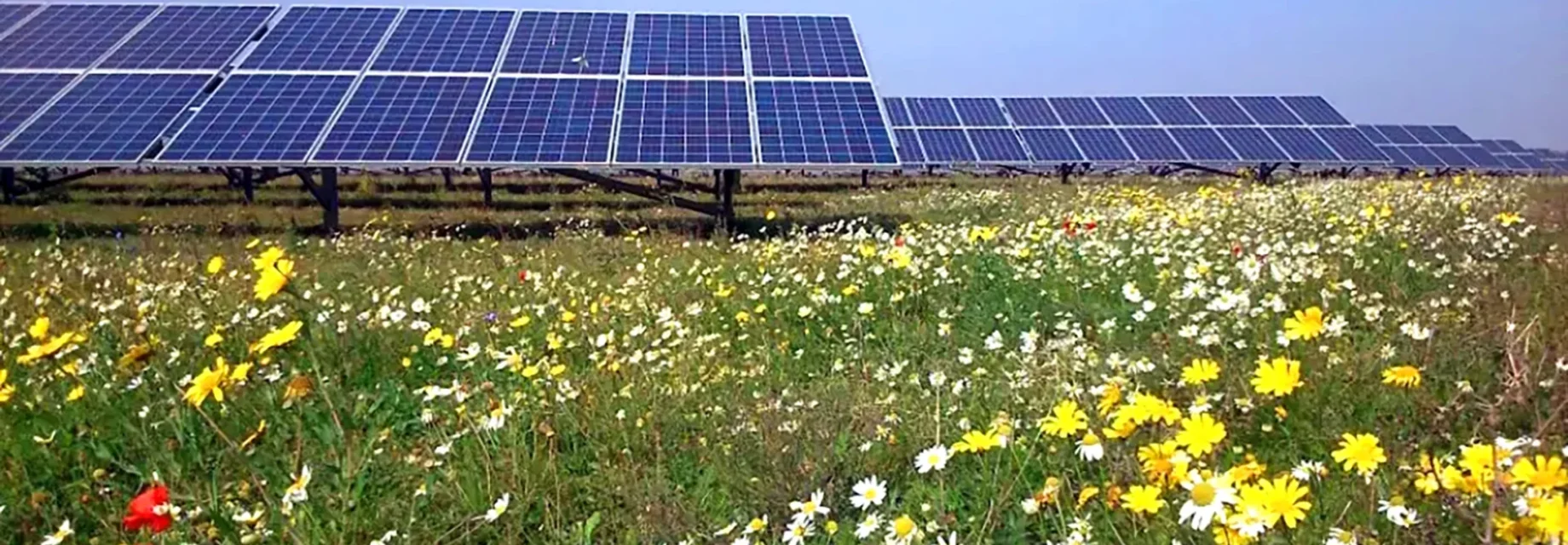
Solar is often presented as a southern England success story, where higher levels of irradiance make large-scale generation straightforward. But with technology evolving rapidly, land from Carmarthenshire to Caithness is proving suitable for solar development. For estates in Wales and Scotland, where game management and conservation are not only important to the countryside economy, but also core parts of rural identity, solar is becoming a practical and profitable part of diversified land strategies.
For landowners, the pressures on traditional farming activity are intensifying. Climate uncertainty, subsidy volatility, supermarket pricing power and input cost inflation are squeezing margins. Against this backdrop, solar provides stable, long-term revenue that can sit alongside traditional farming and land-use activities. It also has implications for inheritance tax management, with Agricultural Property Relief (APR) and Business Property Relief (BPR) a now heightened focus of estate planning owing to changes to inheritance tax that will be imposed by UK Government from April 2026.
In this context, the first attraction of solar to landowners is its predictable, inflation-linked revenue stream. In an environment where farm incomes fluctuate, this stability is hard to ignore. Similarly, farmers are increasingly recognising the opportunity for ‘agrivoltaics’ – the combining of solar and agriculture – whereby sheep grazing may be continued under the natural shade and protection of panels, or where certain types of crops may be planted, such as root vegetables or leafy greens, which are shade tolerant. See Bear Acres pilot site in Hereford trialling 20 differing shade tolerant crops designed to grow under existing solar arrays managed with robotics and Lancaster University PHD project installing solar around newly designed vertical arrays to support self-funded installations.
But away from the financials of farming, solar is not just another business input. Properly designed, it is a land-use that can integrate with conservation and game management, offering a route to measurable biodiversity recovery while supporting the future of rural countryside.
Beyond the Balance Sheet – Solar for Conservation and Biodiversity Gains
The reduction in farming intensity on land set aside for solar projects goes hand in hand with creating new opportunities for conservation and biodiversity gains. Land free from pesticides and herbicides has been shown to significantly recover, creating the conditions where wildlife may thrive.
Marginal land that has historically been less suited to intensive farming than the rest of the farm can be also rested, given an opportunity to recover naturally, while soil structures recover under lighter management. By reducing intensity on certain acres while retaining agricultural identity, estates can create a balanced land management strategy.
And, in a time where post-Brexit farming has seen the reduction of environmental stewardship schemes and many landowners are expressing concern as to how to maintain conservation strategies, the mandatory uplift in biodiversity net gain required in all new solar developments offers a route to measurable outcomes.
The inherent long-term nature of solar projects – typically a lifespan of 30 – 40 years – with land fenced and lightly managed, provides a stability that creates conditions where wildlife can thrive.
Specific benefits typically include:
- Field margins and wildflower corridors – These boost pollinators, beetles and invertebrate life. A 2023 RSPB study found that solar farms managed for nature recorded higher numbers of pollinators and seed-eating birds than neighbouring farmland.
- Small mammals – Reduced disturbance encourages small mammal populations, which in turn support raptors and gamebird chicks.
- Bird species of conservation concern – Lapwing, skylark and yellowhammer all benefit from mosaic habitats combining open ground, grassland and cover crops. The Solar field is proving to provide much needed food for various species of birds such as the Skylark evidenced by Cambridge University in conjunction with the RSPB.
For landowners that combine their land with game management, these benefits play out as direct enhancements to breeding programs and habitat recovery.
- Gamebird chicks profit from the enhanced insect life that wildflower corridors and field margins support.
- Hedgerows and shelterbelts integrated into solar layouts provide essential cover and movement corridors for pheasant and partridge.
- Grey partridge recovery, a GWCT flagship focus, aligns closely with the habitat creation opportunities solar can deliver.
Scaling Conservation Using Solar
With solar often singled out as one of the most effective land uses to deliver the measurable improvements under Biodiversity Net Gain planning policy – which became a legal requirement for all UK development in February 2024 – solar sites could deliver tens of thousands of hectares of high-quality habitat nationwide by the end of this decade.
Findings from the SolarUK Habitat 2025 report suggest that solar can outperform intensive agriculture for species richness and habitat diversity, while maintaining agricultural functionality through grazing.
Research commissioned for Natural England has also highlighted how low-disturbance land uses outperform arable land in supporting pollinators and bird populations. Taken together, the evidence base positions solar as a pragmatic way for landowners to meet both policy obligations and conservation goals.
Cementing a Reputation for Conservation
Alongside the commercial and conservation benefits afforded by solar development, landowners also enhance their environmental reputation, a growing consideration for estates that are both commercial enterprises and custodians of the countryside. The 2023 State of Nature report found that UK farmland bird populations have declined by 58% since 1970, largely due to intensive farming techniques. Against that context, solar-backed biodiversity projects provide a visible and measurable counter-narrative.
The RSPB’s findings on solar farms boosting bird numbers also underlines the opportunity to create landscapes that are both productive and nature-rich. For publicly accessible estates, this becomes a story of leadership in conservation. Aligning with initiatives such as GWCT demonstration [BL1] farms offers further scope for collaboration and credibility.
Finally, solar supports national goals. By contributing to the UK’s legally binding net zero target, estates demonstrate their role in securing energy independence and decarbonisation while strengthening local ecosystems.
A Balanced Future for Land and Game
Solar does not mean taking land out of use. It is about putting land to smarter use.
For landowners, solar can secure the dual benefits of a stable financial footing to underpin the long-term sustainability of their businesses, while delivering tangible recovery for wildlife and game.
The right solar partnership enables estates to demonstrate that energy generation, conservation and game management are not in competition, but can work hand in hand.
Solar, designed strategically to support agri-voltaics and game management alongside conservation, can underpin the next generation of nature-rich, game-rich British countryside.
If you are a landowner considering solar, you may wish to explore our land-mapping tool to assess your land’s potential or contact us for more information. We can bring our development expertise to your land, alongside supporting habitat conducive to your game and conservation business.