Our Projects

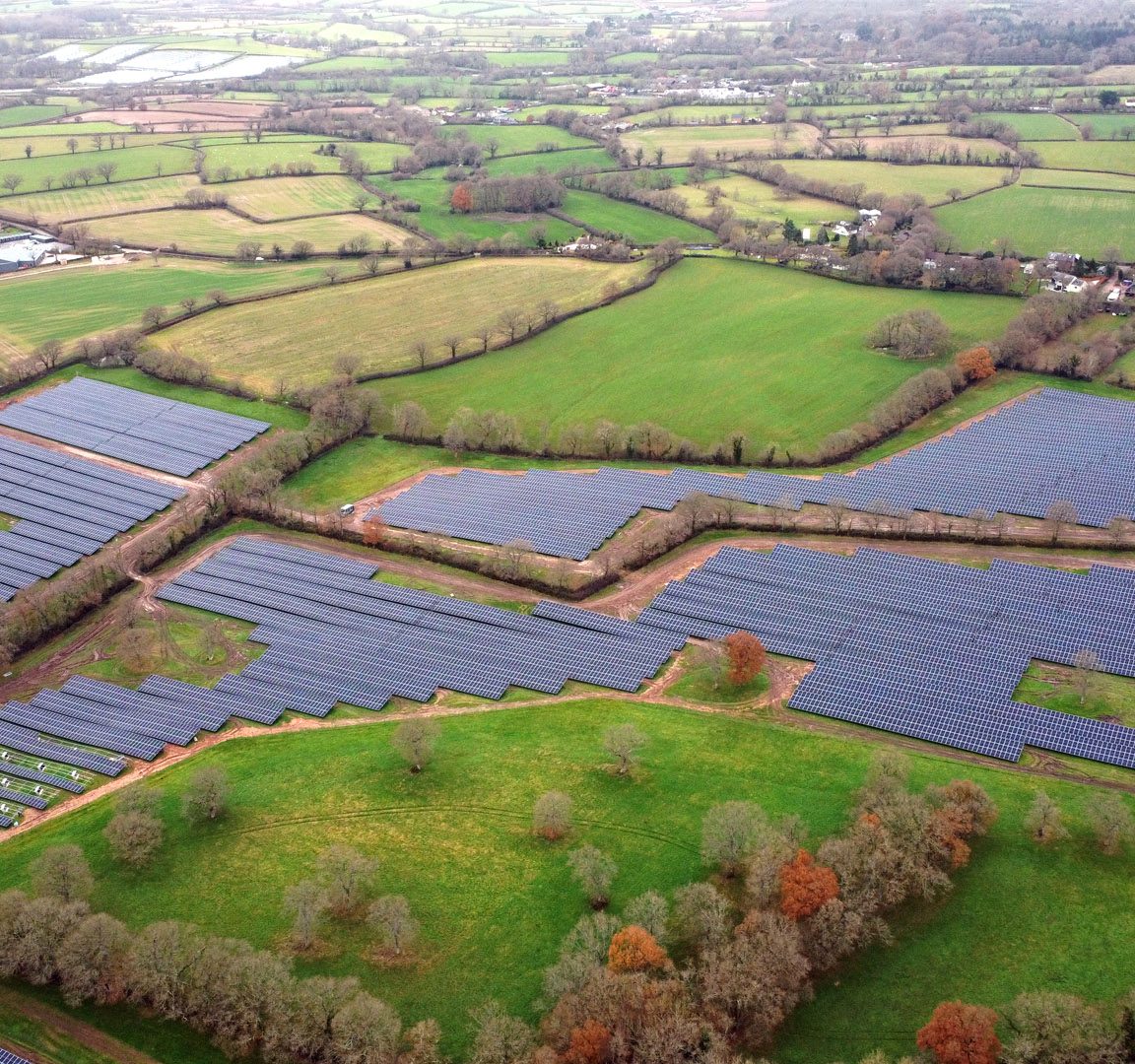
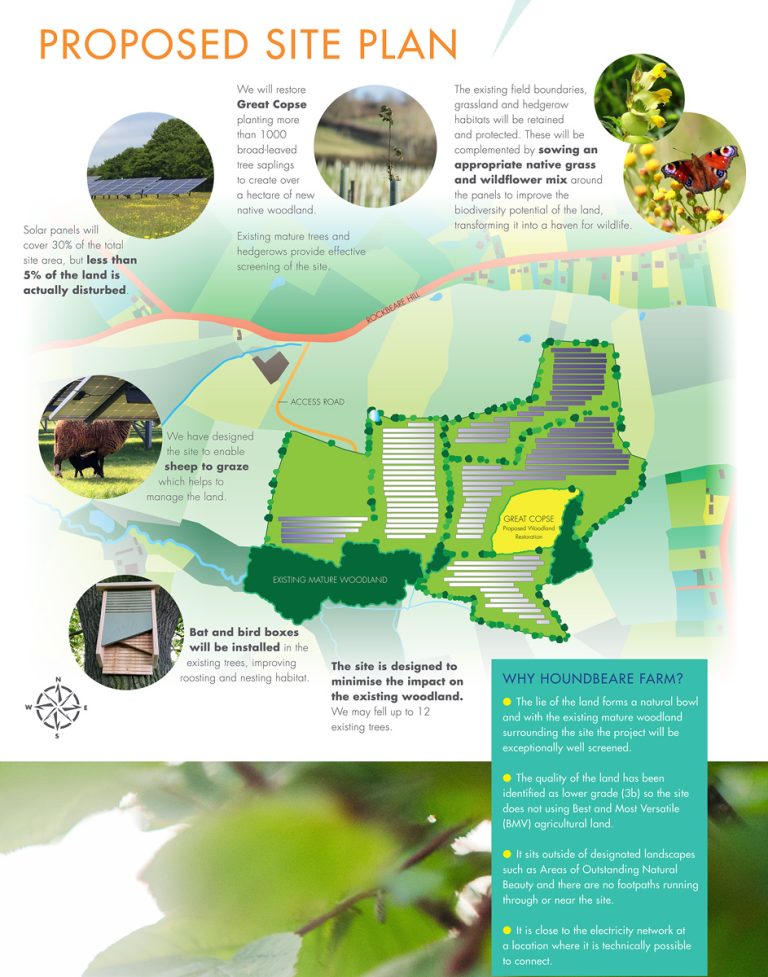
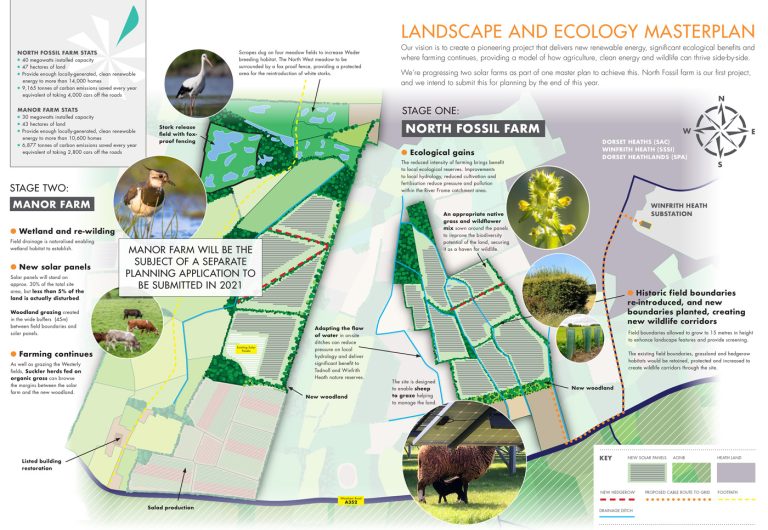
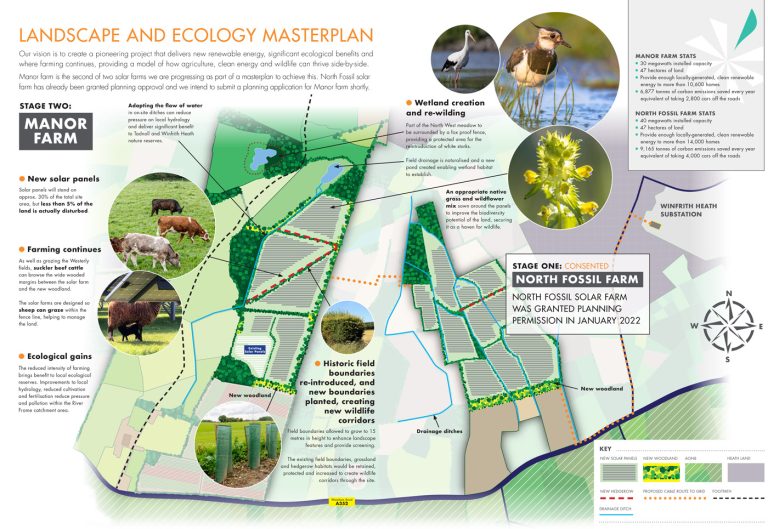
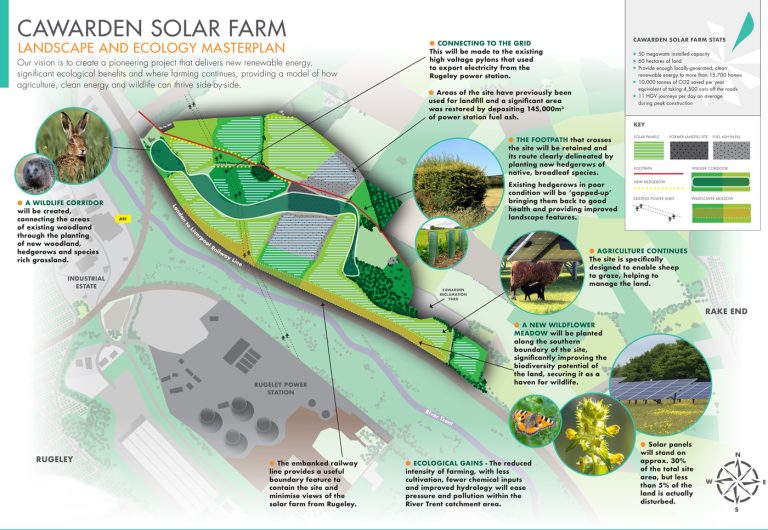
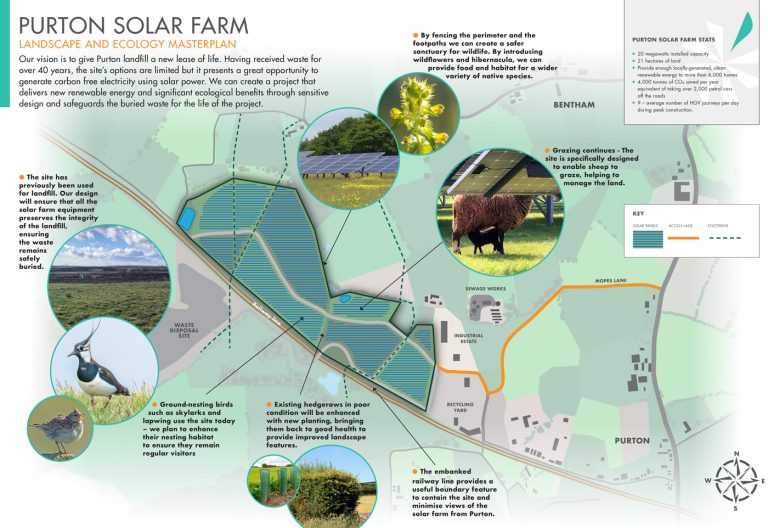
Our project sites are optimised for agrivoltaics – enabling our farming landowners to graze sheep, cultivate crops or develop pollinator habitats between the rows of panels.

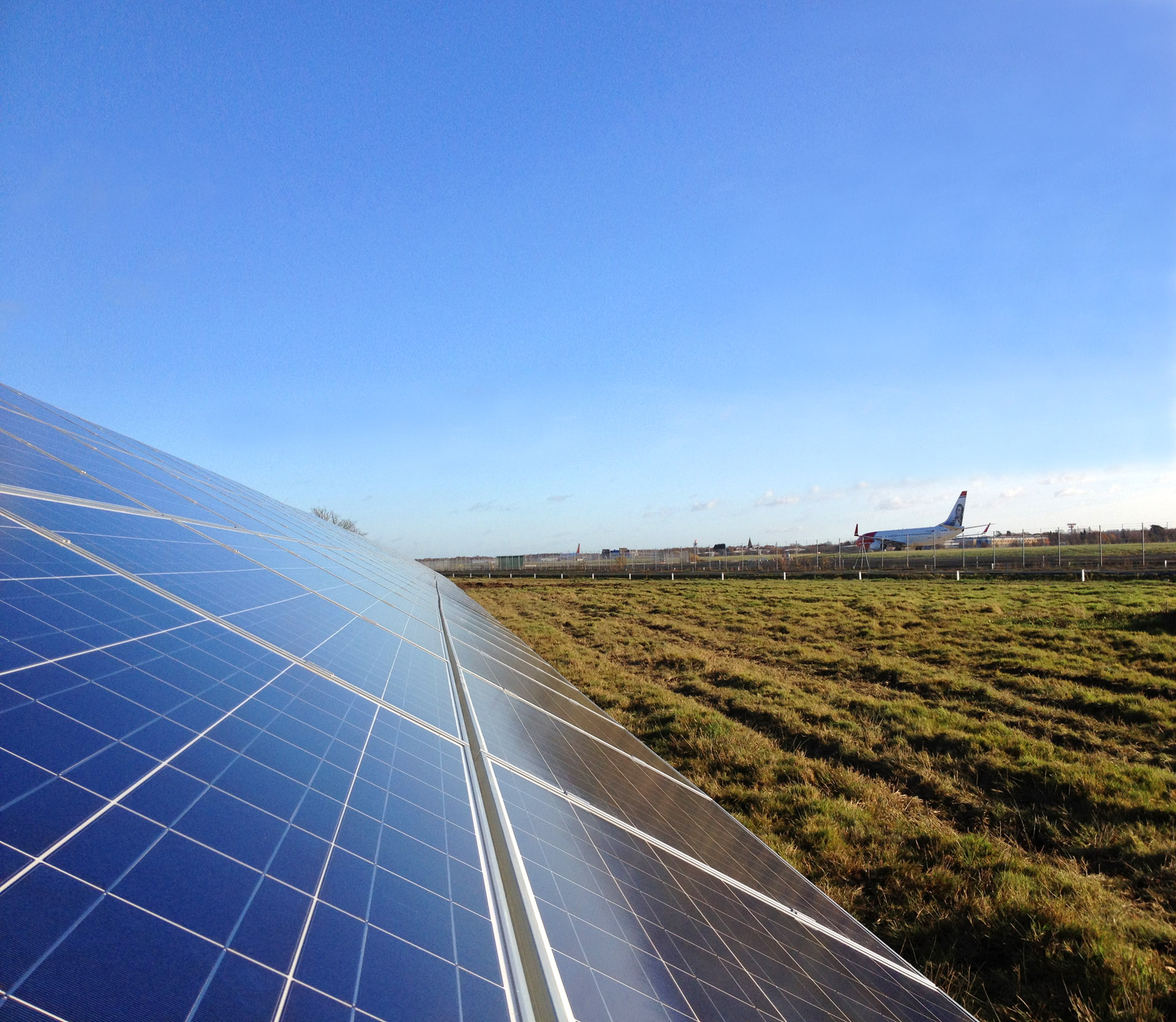
We use a crystalline solar panel, typically bi-facial that offers high efficiency in converting light to power, installed on traditional dual post ground mounting systems using designs that capture sunlight reflected back from the ground. Our array designs typically sit at a height of 2m to 3.5m, with a tilt angle determined by local topography or shading.

At the end of our project tenure, we will recycle our solar equipment, remove supporting structures completely from the ground, and return the site to its original agricultural use.

Solar Facts

Photovoltaic (PV) cells are specially designed silica based tiles or sheets composed of a combination of semi-conductors and conducting material.

Traditionally, PV cells are made from high purity crystalline silicon – a rock-like ‘metal’ that is cut into wafers during the manufacturing process. When photons from light of specific wavelengths hit these tiles, electrons are displaced from the semi-conducting to adjacent conducting material, and an outgoing electric current is induced by the cell. Solar cells can be put together into modules with a wide variety of power outputs, shapes and sizes.

Power output

The maximum power output of a cell or panel is rated in wattage and used to calculate the overall power capacity of an entire installation. But a cell’s actual power capacity depends on how much of it can be utilised during sunlight hours. The efficiency of solar cells in converting light energy ranges from 17-27% depending on the type of cell.

The inverter system – converting DC electricity into AC power

The inverters receive DC electricity from the solar panels. The voltage and current characteristics depend on the configuration of the panels and the level of solar radiance.

Using components like transistors, inverters rapidly switch DC electricity input to create AC electricity output (MVA). This AC electricity is then filtered and ‘smoothed’ to match the profile of the grid’s AC electricity.

Types of panel and efficiency

There are three main types of solar panels: monocrystalline, polycrystalline and thin film. Each captures varying percentages of sunlight. The crystalline cells have almost the same rate of efficiency, followed by thin film.

The current consensus is that the maximum level of sunlight to electricity conversion by a silicon solar cell is around 25%. Mono and polycrystalline solar power became cost-competitive with utility peak power in 2023.

Solar in the UK

Enough sunlight hits the city of Cambridge in 20 minutes to produce enough power for its needs for a while day.

Solar in the UK

The output of a single KW of solar energy is roughly equivalent to burning 170lbs of coal – saving 300lbs of carbon dioxide from polluting the atmosphere.

Solar in the UK

The UK Government states that only 0.5% of farmland is required to meet solar power generation targets, with the majority on unproductive, over-nitrated sites.

Solar in the UK

Solar panels don’t need consistent sunshine to generate power, they can still generate electricity on gloomy days.

Projects in planning

Projects in consultation

Engagement with local parish councils and communities forms a vital component of our project planning process. We carefully consider and, where feasible, incorporate the feedback received into our design proposals. Below are links to recent projects, along with the information that has been shared with the respective local communities. These projects are presently undergoing EIA screening and are in consultation with the parish. Please refer to ILOS for the most up to date plans.

Spring Farm Solar Park

Stoke Orchard Solar Park

Norton Estate – Onibury Parish
Rodmore Farm – Evercreech
Carr Lane – Hibaldstow
Mill Farm – South Cave
Old House Farm – Hartlip
Lodge Farm – Bishops Castle Town Council
Stable Yard – Knaptoft
Bower Hinton Farm – Martock
Cherry Garden – Coleford
Meadowley – Morville
Dinedor – Dinedor
Tir-y-Gelli – Ynysybwl and Coed-y-Cwm Community Council
Gilfach Glyd Farm – Ynysybwl and Coed-y-Cwm Community Council
Coedmoelion – Pontyberem Community Council
Llanover Farm – Gobion & Goetre Fawr Community Councils
ThingHill Court – Withington
Brymbo – Brymbo Community Council

Get a no-obligation review of your land now.

PLOT YOUR LAND